Mercy Ships: Charity Rating, Controversies, and the Data Behind the Mission
When you talk about humanitarian efforts, the narratives often lean heavy on emotion. And for good reason. But for those of us who prefer to look at the ledger, the real story, the actionable insight, usually hides in the numbers. Mercy Ships, an organization that’s become practically synonymous with floating hospitals, just gave us a fresh set of figures to chew on. They’re not just building ships; they’re building an operational model that demands a level of logistical precision most corporations only dream of.
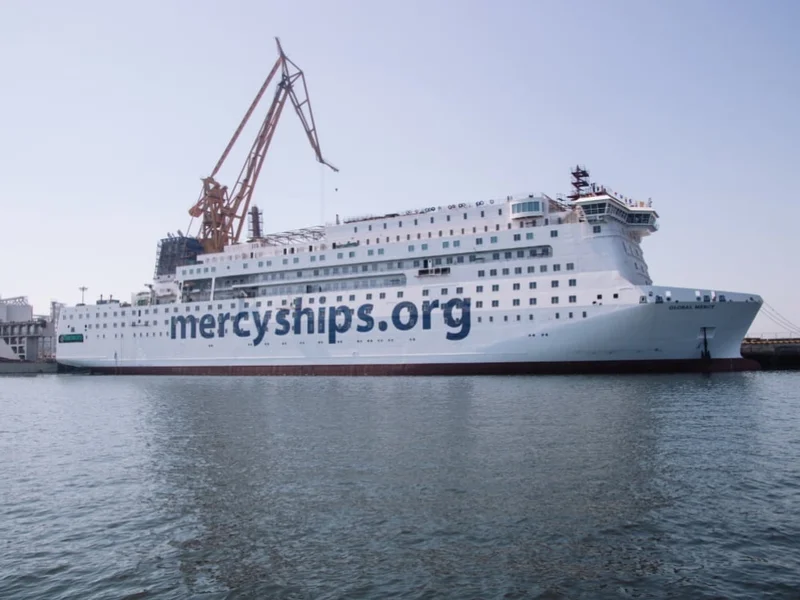
The headline grabbing the maritime community this past month was the official steel cutting ceremony for the AFRICA MERCY II. This isn't just another vessel; it’s a direct expansion of their surgical capacity, a concrete manifestation of their mission. On October 29, in a ceremony that included a symbolic tree planting (a nice touch, but I’m more interested in the tonnage), the first steel plate was cut. This marks the beginning of what will become one of the world’s largest civilian hospital ships. Steel cut for Mercy Ships second new purpose-built hospital ship - DredgeWire We’re talking about a vessel stretching 174 meters long and 28.6 meters wide, packed with 12 decks. It’s designed to house 644 volunteers and medical professionals, a significant operational footprint by any measure.
Inside, the numbers are even more telling: six operating rooms, 98 acute care beds (that’s for immediate post-op or severe cases), 86 low care beds, and seven ICU/isolation beds. This isn't just an incremental bump; it’s a substantial scaling up of their ability to deliver free surgical care and crucial medical training across Africa. My analysis suggests this isn't simply about adding another ship to the fleet; it's about refining a proven model. The AFRICA MERCY II is, in effect, a sister ship to the GLOBAL MERCY, which was delivered in 2021. Leveraging the same design, originally derived from a never-realized Stena RoRo “Stena Seabird” class, indicates a shrewd approach to construction efficiency and operational standardization. Why reinvent the wheel when you’ve got a blueprint that works? This strategy minimizes design risks and likely streamlines crew training, which is a non-trivial consideration for such a complex, specialized vessel.
The Numbers Behind the Humanitarian Engine
The ambition here isn't just about steel and decks; it’s about funding. And that brings us to the other significant data point: Mercy Ships’ 2025 Cargo Day campaign. This initiative, which mobilizes the maritime industry, has already surpassed $1.6 million in pledges. The target? A cool $2.5 million by year-end. Mercy Ships’ Cargo Day Sets Sights on Record Fundraising to Power Life-Changing Medical Missions For context, since its 2016 launch, Cargo Day has collectively raised nearly $15 million from over 150 participating companies. That’s an average of $1.5 million per year, which means this year’s $2.5 million target represents a substantial 66% increase over that historical average. It’s a bold target, certainly, but if achieved, it signals a remarkable surge in industry commitment. I’ve looked at hundreds of these philanthropic initiatives, and this kind of year-over-year growth, particularly in a cyclical industry like shipping, genuinely catches my attention.
The mechanics are simple enough: companies channel commissions from freight and fixtures, or make direct contributions. What started in the tanker sector has broadened to dry bulk, shipowners, shipbuilders—a testament to the unifying vision of the late Tim Webb, whose legacy is clearly driving this year’s campaign. But here’s where the numbers get truly impactful: these funds directly support thousands of free surgeries and medical training for healthcare workers. When we talk about "thousands," we're talking about lives fundamentally altered, sight restored, mobility regained. But how do they precisely track the long-term ripple effects of training hundreds of healthcare workers? That's a harder metric to pin down, and one I often wonder about in these large-scale programs. How do we ensure that impact compounds sustainably beyond the immediate intervention?
Scaling Hope: Ambition Meets Reality
The construction of the AFRICA MERCY II and the aggressive fundraising for Cargo Day aren't isolated events; they're two sides of the same coin, each fueling the other. This new ship, a 174-meter-long floating hospital, isn't just a symbol of hope; it's a massive, complex piece of engineering that requires sustained, substantial financial backing to operate. The operational costs for a vessel of this size, with its specialized medical equipment and a crew of hundreds, are immense. Consider the sheer logistics of moving an entire hospital, complete with six operating rooms and nearly 200 beds, across oceans to serve remote coastal communities. It's like trying to run a major urban medical center, but one that’s constantly changing its ZIP code.
The fact that this is a sister ship, based on the GLOBAL MERCY design, suggests a degree of cost-effectiveness and operational familiarity. But even with that, the initial capital outlay and ongoing maintenance for such a sophisticated vessel are staggering. What are the projected annual operating costs for the AFRICA MERCY II? And how much of that $2.5 million Cargo Day target directly translates into boots on the ground, or rather, scalpels in the operating room, versus the overhead of running such an international enterprise? These are the kinds of questions that separate the aspirational from the operational. The commitment from MSC Foundation as the main sponsor for the AFRICA MERCY II is a critical piece of this puzzle, providing a foundational layer of funding that allows the Cargo Day pledges to focus on operational impact. Without that anchor, the entire structure would be far more precarious.
The Math of Meaningful Impact
Mercy Ships is making a clear, data-driven bet on scale. The AFRICA MERCY II, combined with the GLOBAL MERCY, will undoubtedly expand their reach. But the real challenge, as always, lies in the execution. Building a ship is one thing; consistently staffing it with 644 volunteers, maintaining cutting-edge medical facilities in often challenging environments, and ensuring that the "thousands of free surgeries" and "hundreds of healthcare workers trained" translate into lasting, systemic change—that's the true measure of their success. The numbers are impressive, but the long-term data on sustained health improvements and local capacity building will be the ultimate arbiter.
Related Articles

Mars Exploration: NASA's Struggles vs. the Search for Life
Perseverance's Mars Findings: A Reality Check or Just Rocks? NASA's Perseverance rover, after nearly...

Why AI Trading Is Screwing You Over - Trader Takeover Incoming
AI Stealing White-Collar Jobs? Good Riddance. The Robots Are Coming (And I'm Kinda Here For It)[...

WinCo This Thanksgiving: Your Essential Guide to Stress-Free Holiday Shopping!
The aroma of roasting turkey, the bubbling of cranberry sauce, the excited chatter of family—it’s Th...

The Aster Name is a Mess: A breakdown of the flower, the crypto, and the weird-ass movies
Forget Crypto, My New Investment is a Six-Inch Weed Called 'Snow Flurry' So, I’m scrolling through m...

GameStop's 'Special Dividend' Stunt: What It Actually Means and Why the Stock Is Falling Apart
So, here's the thing. I can't write the article you came here to read. I was supposed to. I had a to...

Volkswagen: Jetta, Tiguan, and Atlas: What's Next & How They Stack Up
The automotive landscape is a volatile beast, shifting with consumer whims and regulatory pressures....