DeFi Performance Post-Crash: A Stark Divergence - Reddit's Take
DeFi's looking a bit…frosty. The FalconX report paints a picture of a sector still reeling from the October 10th crash. Only 2 out of 23 leading DeFi tokens are in the green year-to-date. Down 37% quarter-to-date on average? Ouch. DeFi Token Performance & Investor Trends Post-October Crash | 2025 Analysis - News and Statistics - IndexBox
Investors are running for cover, apparently. We're seeing a flight to "safer" tokens – the ones with buybacks or, failing that, a decent narrative catalyst. This isn't exactly a vote of confidence for the broader DeFi landscape. It feels like musical chairs, and the music stopped a while ago.
DeFi's Two Faces: Resilience vs. Red Flags
Sector Skews: DEX Fees vs. Lending Woes There's a discrepancy in the data, though. Some decentralized exchanges (DEXes) – CRV, RUNE, CAKE – are actually posting *greater* 30-day fees compared to September 30th. So, people are still trading. Maybe they're just trading different things, or maybe they're trading with a different level of conviction. The lending sector, however, is a different story. Lending and yield names have broadly steepened on a multiples basis, as price has declined considerably less than fees. That’s not a healthy sign. It suggests that the income these protocols are generating isn't enough to justify their valuations, even after the price declines. Are they overvalued, or are the fees too low? Or both? Then you have the new launches. Bitcoin Hyper (HYPER), Maxi Doge (MAXI), PEPENODE (PEPENODE), Ethena (ENA), Best Wallet Token (BEST), SUBBD (SUBBD), Drift Protocol (DRIFT), SpacePay (SPY), Hyperliquid (HYPE), Aster (ASTER). A mixed bag of promises and meme potential. Community sentiment, according to the report, is equally mixed. Traders are praising strong fundamentals in some cases, but they're also worried about token unlocks—and for good reason. Token unlocks can flood the market and depress prices, regardless of how "strong" the underlying fundamentals are. And this is the part of the report that I find genuinely puzzling. The discussions around Ethena, for example, are focused on the gap between protocol strength and token performance. There are concerns about transparency around recent withdrawals. Drift Protocol is praised for fast execution and safety, but users are questioning why protocol revenue hasn’t translated to token value. Hyperliquid is facing intense debate around a $314M token unlock. And Aster? Well, Aster got delisted from DefiLlama over suspected wash trading and manipulation concerns. What does it all mean? It means that DeFi isn't a monolith. Some corners are showing resilience, others are…not.Regulation: Friend or Foe of DeFi Growth?
The Regulatory Wildcard The report mentions the US achieving regulatory clarity in 2025 with the GENIUS Act and the CLARITY Act. The UK's got draft legislation, and MiCA is fully applicable in the EU. On paper, this should be a good thing. Clarity should attract institutional investment and foster innovation. But, and this is a big "but," regulation can also stifle innovation. It can create barriers to entry for smaller players and favor established institutions. It depends on how these laws are interpreted and enforced. There's no way to quantify the impact of regulation at this stage, but it's a factor that can't be ignored. Precedence Research projects the DeFi market will grow from $32B in 2025 to $1.5T by 2034. That’s roughly 46x growth. Bold prediction, and potentially accurate, but let’s be real, those projections are based on assumptions. They assume that the current problems will be solved, that regulation will be favorable, and that new innovations will emerge. Sentiment, according to the report, is "max negative." That could be a contrarian indicator, setting up for a rally. Or it could be a self-fulfilling prophecy. “Max negative” is pretty broad, though. What percentage of social media posts are negative? What’s the ratio of bullish to bearish articles? Without concrete data, "max negative" is just a feeling. It's worth remembering that the CoinDesk Bitcoin Trend Indicator (BTI) has indicated "Significant Downtrend" for 24 days as of November 27, 2025. Altcoins, proxied by the CoinDesk 80 Index (CD80), have mostly performed in line with or better than BTC post the October 10 drop. Crypto Long & Short: The Striking Dichotomy in DeFi Tokens Post 10/10 - CoinDesk Altcoins are outperforming BTC, but BTC is in a “significant downtrend.” Make of that what you will. Data Doesn't Lie, but It Can Mislead The DeFi market is complex. There are pockets of strength, but there are also serious weaknesses. The key is to look beyond the headlines and focus on the underlying data. Focus on the protocols that are generating real revenue, the ones that are solving real problems, and the ones that are transparent about their operations. And, of course, be wary of anything that sounds too good to be true. Because in DeFi, as in life, it usually is.
Related Articles

The Aster DEX Breakthrough: What It Is and Why It’s a Glimpse Into DeFi’s Future
A number gets thrown around in technology that is so large it almost loses its meaning: a trillion....

Grand Canyon Shutdown: What's Actually Closing and Why It's a Total Mess
So I was trying to read an article the other day, and this pop-up slams onto my screen. A "Cookie No...

Pi Network: Unpacking the Latest News and Its Real Value – What Reddit is Saying
Pi Network's Grand Utility Play: Will Gaming Finally Anchor Its Volatile Price? The digital asset sp...

The October TV Dump: A Guide to What Isn't Total Garbage
So, how soon is too soon? Apparently, the answer is "never." It's been a year since the Hamas attack...
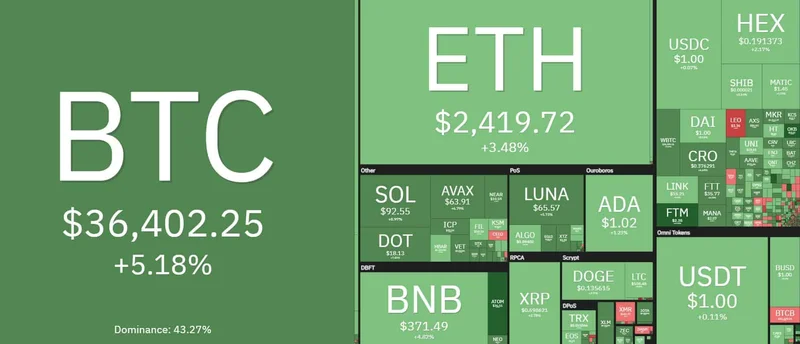
Downturn Deception: The Truth About Crypto's Rebound (Thoughts?)
Bitcoin's "Recovery"? Don't Even Start With Me... So, Bitcoin's "rebounding,...

B&M Recalls Harvest Mug: Why Your 'Cozy' Fall Mug Might Just Explode
So let me get this straight. The primary, singular, unassailable function of a mug is to hold hot li...